
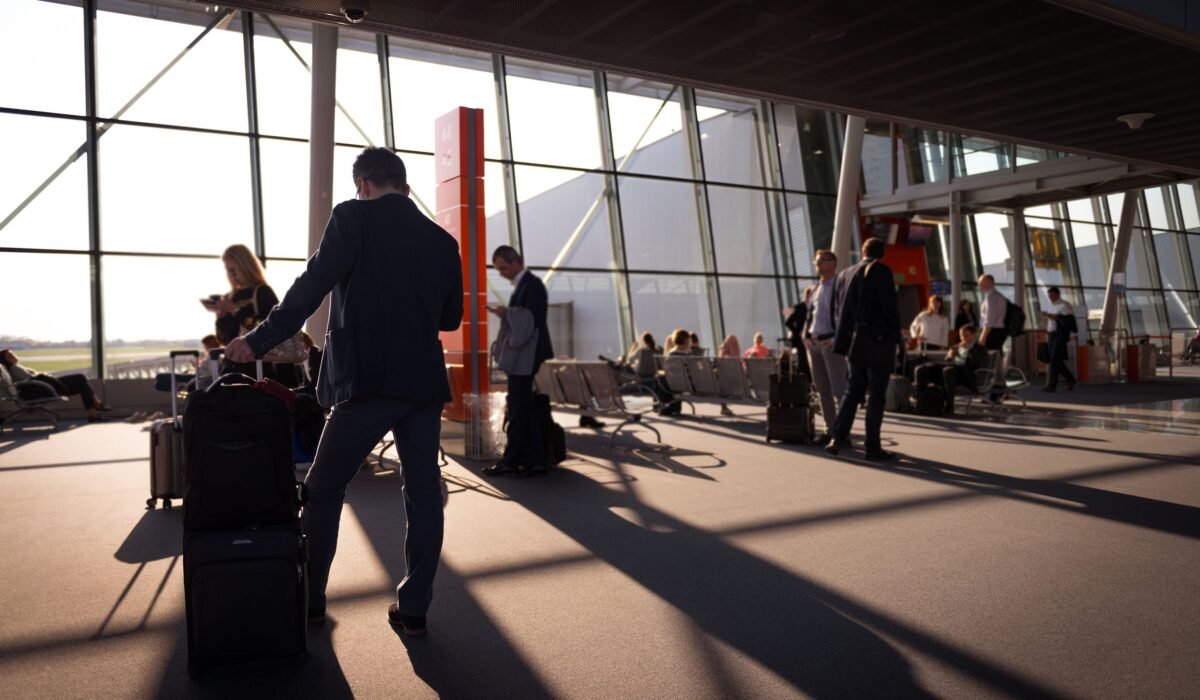
Navigating the ever-changing landscape of airline regulations can be daunting, but understanding USA flight baggage policies 2026 is crucial to avoiding unexpected fees and travel stress. As your dedicated Travel Support Team, we know the burning question on every traveler’s mind: “How can I fly within the U.S. without breaking the bank on luggage?” This comprehensive guide will equip you with the knowledge to master airline baggage rules, from carry-ons to checked bags, and ensure a smooth journey.
Speak With A Flight Reservation Specialist
Need help with flight reservations, flight changes, cancellations, refund requests, missed flights, or last-minute bookings? Speak with a flight reservation specialist now.
- Flight Reservations
- Flight Changes
- Flight Cancellations
- Refund Assistance
- Last-Minute Bookings
- Travel Support
What are the Current USA Flight Baggage Policies for Carry-Ons?
Understanding airline carry-on rules is your first line of defense against unexpected fees. For 2026, most major U.S. airlines, including American, Delta, United, JetBlue, and Alaska Airlines, adhere to a standard carry-on limit of 22 x 14 x 9 inches. This measurement typically includes wheels and handles, so always measure your bag accurately.
What most people miss is that even a slight deviation can lead to a gate check and an associated fee. My experience in researching airline policies shows that airlines are becoming increasingly strict, especially with the “carry-on crunch” we’ve observed. Always check your specific airline’s website before you fly, as regional carriers or smaller aircraft might have even tighter restrictions.
Here’s a general airline carry-on size chart for popular US airlines:
- American Airlines: 22 x 14 x 9 inches (56 x 36 x 23 cm)
- Delta Air Lines: 22 x 14 x 9 inches (56 x 36 x 23 cm)
- United Airlines: 22 x 14 x 9 inches (56 x 36 x 23 cm)
- Southwest Airlines: 24 x 16 x 10 inches (61 x 41 x 25 cm) – slightly more generous
- Alaska Airlines: 22 x 14 x 9 inches (56 x 36 x 23 cm)
- JetBlue Airways: 22 x 14 x 9 inches (56 x 36 x 23 cm)
- Spirit Airlines: 22 x 18 x 10 inches (56 x 46 x 25 cm) – carry-on usually costs extra
- Frontier Airlines: 24 x 16 x 10 inches (61 x 41 x 25 cm) – carry-on usually costs extra
Remember that these are maximums. If your bag looks even slightly oversized, you might be asked to try it in a sizer at the gate. Don’t risk it; measure twice.
Understanding Personal Item vs. Carry-On Rules
One of the most common points of confusion for travelers is the distinction between a personal item and a carry-on bag. A personal item is typically a smaller bag, like a purse, laptop bag, or small backpack, designed to fit completely under the seat in front of you. This is usually allowed in addition to your carry-on bag, and it’s almost always free.
For most US flights, personal item dimensions US flights are around 17 x 10 x 9 inches (43 x 25 x 23 cm). This can vary slightly by airline. For example, some airlines might specify that your personal item must fit in a smaller space than others. Always check your specific airline’s policy. The key takeaway here is to ensure your personal item is truly small enough to fit under the seat without impeding the passenger behind you. That’s the primary purpose.
It’s important to differentiate this from a carry-on, which goes in the overhead bin. Many basic economy fares now charge for a carry-on but still allow a free personal item. Savvy travelers leverage this by packing as much as possible into their personal item to avoid common airline fees. This strategy is a cornerstone of navigating USA flight baggage policies 2026 successfully.
How Much Do Checked Bags Cost on Major US Airlines in 2026?
The cost of checked baggage has become a significant revenue stream for airlines, and these fees have been steadily increasing. According to the Bureau of Transportation Statistics (BTS), U.S. airlines collected over $7.4 billion in passenger baggage fees in 2025, marking a 162 percent increase over five years. This trend is continuing into 2026.
As of April 2026, major U.S. airlines like American, Delta, and United have increased their first checked bag fees by at least $5 to $10 since early 2024. The average cost for a first checked bag now ranges from $45 to $50, and a second checked bag from $55 to $60 for domestic flights. Southwest Airlines, historically known for “bags fly free,” introduced charges of $35 for the first bag and $45 for the second in 2025 for most passengers, a significant industry shift.
Here’s a general overview of checked bag fees 2026 for domestic flights (expect variations based on route, fare class, and loyalty status):
- First Checked Bag: $45 – $50
- Second Checked Bag: $55 – $60
- Third+ Checked Bag: $100+ (can vary widely)
These fees are per bag, per direction. So, a round trip with one checked bag could cost you $90-$100. Always pay for checked bags online in advance if possible, as it’s almost always cheaper than paying at the airport counter. The checked baggage weight limits domestic flights are typically 50 pounds (23 kg) for economy class. Exceeding this will incur substantial overweight baggage fees airlines can charge, often starting at $100-$200 for bags between 51-70 pounds.
Speak With A Flight Reservation Specialist
Need help with flight reservations, flight changes, cancellations, refund requests, missed flights, or last-minute bookings? Speak with a flight reservation specialist now.
- Flight Reservations
- Flight Changes
- Flight Cancellations
- Refund Assistance
- Last-Minute Bookings
- Travel Support
Smart Strategies to Avoid Airline Baggage Fees
Avoiding airline baggage fees in 2026 requires a proactive approach and understanding the nuances of each airline’s policy. Jay Sorensen, an aviation consultant, noted that legacy carriers followed budget airlines in unbundling services, making checked bags a major revenue stream. But you don’t have to be a victim of these charges.
Here are some smart strategies to keep your money in your pocket:
- Leverage Airline Credit Cards: Many co-branded airline credit cards offer a free first checked bag for the cardholder and often several companions on the same reservation. This benefit alone can easily offset the annual fee for frequent flyers.
- Attain Elite Status: Loyalty programs often grant complimentary checked bags to elite members. Even lower-tier statuses can offer this perk, so consider sticking with one airline alliance if you travel frequently.
- Pre-pay Online: Always purchase any necessary checked bags online during booking or check-in. It’s almost always cheaper than paying at the airport counter or gate. This can save you $5-$10 per bag.
- Pack Light & Smart: This might seem obvious, but it’s the most effective. Consider minimalist packing or using compression bags to maximize space in your carry-on or personal item. Roll your clothes instead of folding them.
- Understand Basic Economy Baggage Allowance: Basic economy fares often exclude free carry-on bags (only a personal item is allowed) and always charge for checked bags. If you need to bring more than a personal item, sometimes a standard economy ticket, which includes a carry-on, can be cheaper than a basic economy ticket plus a carry-on fee.
- Travel with Only a Personal Item: If your trip is short, embrace the personal item challenge. Many experienced travelers can fit a surprising amount into a backpack that fits under the seat.
- Ship Your Luggage: For longer trips or multiple bags, consider shipping your luggage ahead of time via services like FedEx, UPS, or specialized luggage shipping companies. Compare costs; it can sometimes be cheaper than multiple airline baggage fees, especially for oversized baggage fees airlines might charge.
By combining these tactics, you can significantly reduce or even eliminate baggage costs, making your journey smoother and more affordable. It’s all about knowing how to avoid airline baggage fees effectively.
Navigating TSA Rules: Liquids, Prohibited Items, and Special Devices
Beyond airline-specific policies, the Transportation Security Administration (TSA) sets federal rules for what you can bring on board, both in carry-on and checked luggage. Adhering to these rules is non-negotiable for smooth airport security screening.
TSA’s 3-1-1 Rule for Liquids
The TSA 3-1-1 rule liquids remains firmly in place for carry-on bags in 2026. This rule states that liquids, gels, aerosols, creams, and pastes must be:
- 3.4 ounces (100 milliliters) or less per container.
- Contained in one quart-sized bag.
- Limited to one bag per passenger.
Place this clear plastic bag in a readily accessible spot in your carry-on, as you’ll need to remove it for screening. What many travelers overlook is that this rule applies to many items you might not consider “liquids,” like peanut butter, mascara, and gel deodorant. Always err on the side of caution.
Prohibited Items in Carry-On and Checked Luggage
The TSA provides comprehensive lists of prohibited items checked luggage TSA and carry-on items to ensure flight safety. Common items prohibited in carry-ons but allowed in checked bags include:
- Sharp objects (knives, box cutters, large scissors)
- Sporting equipment (baseball bats, golf clubs, hockey sticks)
- Firearms and ammunition (with specific packing requirements)
- Tools larger than 7 inches
Conversely, some items are prohibited in both, such as explosives, flammable liquids, and certain chemicals. Always check the TSA’s “What Can I Bring?” tool if you’re unsure about an item. In my experience, a quick search on their website can save you significant hassle at the security checkpoint.
Flying with Medical Devices and Medications
Traveling with medical devices like CPAP machines or medications often raises questions. The good news is that most medical devices, including CPAP machines, are allowed in carry-on bags and do not count towards your carry-on limit. Medications, both prescription and over-the-counter, are also generally allowed in carry-on bags.
Liquid medications are exempt from the 3-1-1 rule, but you must declare them to the TSA officer for inspection. It’s always a good idea to carry a doctor’s note for prescription medications, especially if they are in larger quantities or require syringes. This helps streamline the screening process and avoids any confusion.
Speak With A Flight Reservation Specialist
Need help with flight reservations, flight changes, cancellations, refund requests, missed flights, or last-minute bookings? Speak with a flight reservation specialist now.
- Flight Reservations
- Flight Changes
- Flight Cancellations
- Refund Assistance
- Last-Minute Bookings
- Travel Support
The “Carry-On Crunch”: What to Expect at the Gate
The “Carry-On Crunch” refers to the increasing strictness and inconsistency of carry-on enforcement, particularly at the boarding gate. As airlines charge more for checked bags, more passengers try to bring larger carry-ons, leading to crowded overhead bins and gate agents being forced to check bags that exceed limits or simply don’t fit.
What to expect at the gate in 2026:
- Sizers in Use: Gate agents are more frequently asking passengers to place their carry-on bags into the metal sizers. If it doesn’t fit, you’ll be required to gate-check it.
- Gate-Check Fees: Be prepared for a higher fee if your bag is gate-checked due to size or lack of overhead space. These fees are often significantly more expensive than paying for a checked bag online.
- Overhead Bin Scramble: Boarding early (if your fare class allows) is more important than ever to secure space in the overhead bins. If bins are full, even compliant carry-ons may be gate-checked for free, but it still causes delays and inconvenience.
- Basic Economy Scrutiny: Passengers on basic economy fares, which often only allow a personal item, face particular scrutiny. If you show up with a carry-on, expect to pay a fee and have it checked.
The practical observation here is that airlines are incentivized to ensure compliance, as it reduces boarding times and generates additional revenue. Don’t be the traveler holding up the line; ensure your bag meets the airline carry-on rules before you even get to the airport.
What to Do if Your Baggage is Lost, Delayed, or Damaged
Despite your best efforts, sometimes things go wrong. Knowing the protocol for mishandled baggage can save you a lot of stress. In 2023-2024, JetBlue Airways was identified as the most reliable US airline for luggage, while American Airlines had the highest mishandled bag rate. While incidents are relatively low, they do happen.
If Your Baggage is Delayed or Lost:
- Report Immediately: File a report with the airline’s baggage office *before* leaving the airport. Provide your flight details, baggage claim tags, and a detailed description of your luggage.
- Keep Records: Get a copy of the report, a reference number, and contact information for the baggage service. Take photos of your baggage claim tags.
- Temporary Expenses: If your bag is delayed, airlines are typically responsible for reasonable expenses incurred while you wait for your luggage (e.g., toiletries, essential clothing). Keep all receipts.
- Lost Luggage Compensation US Airlines: If your bag is declared lost (usually after 5-7 days for domestic flights), you are entitled to compensation. For domestic flights, the maximum liability is currently around $3,800 per passenger, set by the U.S. Department of Transportation.
If Your Baggage is Damaged:
- Report Immediately: Just like lost luggage, report damaged bags to the airline’s baggage office at the airport. Document the damage with photos.
- Assess Damage: The airline will assess the damage and may offer repair, replacement, or compensation. Keep in mind that normal wear and tear is usually not covered.
Remember, your consumer rights are protected by the U.S. Department of Transportation (DOT). If you feel the airline isn’t adequately addressing your claim, you can file a complaint with the DOT. Having travel insurance with baggage protection can also provide an additional layer of security.
Speak With A Flight Reservation Specialist
Need help with flight reservations, flight changes, cancellations, refund requests, missed flights, or last-minute bookings? Speak with a flight reservation specialist now.
- Flight Reservations
- Flight Changes
- Flight Cancellations
- Refund Assistance
- Last-Minute Bookings
- Travel Support
Special Baggage: Sports Equipment, Musical Instruments & Medical Needs
Traveling with items that don’t fit standard baggage rules requires special attention to USA flight baggage policies 2026. Airlines have specific guidelines and fees for oversized or uniquely shaped items.
Sports Equipment
Most airlines treat sports equipment (e.g., golf clubs, skis, surfboards, bicycles) as standard checked baggage, provided it meets weight and size limits. However, due to their irregular dimensions, they often incur oversized baggage fees airlines typically charge. These fees can be substantial, ranging from $75 to $150 or more per item. Always check your airline’s specific policy for flying with sports equipment on US flights, including any special packing requirements (e.g., hard cases for bikes).
Musical Instruments
Musical instruments are often a point of concern for musicians. Small instruments (e.g., violins, small guitars) can usually be carried on if they fit in the overhead bin or under the seat. Larger instruments (e.g., cellos, larger guitars) may require purchasing an extra seat or checking them as special baggage. Airlines generally advise carrying valuable or fragile instruments on board if possible. If checked, ensure they are in a hard-shell case and well-padded. Be aware of varying airline baggage policy comparison for these items.
Medical Needs
As mentioned earlier, essential medical devices and medications generally have more lenient rules. Oxygen concentrators (POCs) and CPAP machines are typically allowed as carry-on items and do not count towards your carry-on limit. Always have documentation from your doctor and inform the airline in advance, especially for items requiring power or specific storage. This includes items like syringes and diabetic supplies, which are permitted with proper identification and packaging.
Understanding these specific rules helps avoid last-minute surprises and ensures your special items, or those critical for your health, travel safely with you.
Frequently Asked Questions
What are the carry-on baggage size limits for US domestic flights?
For most major U.S. airlines in 2026, the standard carry-on size limit is 22 x 14 x 9 inches (56 x 36 x 23 cm), including handles and wheels. Southwest Airlines offers a slightly more generous allowance of 24 x 16 x 10 inches, but it’s always best to verify with your specific airline.
How much does it cost to check a bag on American Airlines (or other specific airlines)?
As of 2026, the average cost for a first checked bag on major U.S. airlines like American, Delta, and United ranges from $45 to $50 for domestic flights. A second checked bag typically costs between $55 and $60. These fees are per bag, per direction, and can be higher if paid at the airport counter.
What is the 3-1-1 rule for liquids in carry-on bags?
The TSA’s 3-1-1 rule requires that all liquids, gels, aerosols, creams, and pastes in carry-on bags be in containers of 3.4 ounces (100 milliliters) or less. These containers must fit into one quart-sized bag, with only one such bag allowed per passenger. This rule is crucial for efficient security screening.
Are personal items counted as carry-on bags?
No, a personal item is distinct from a carry-on bag and is generally allowed in addition to your carry-on. A personal item is typically a smaller bag, such as a purse, laptop bag, or small backpack, designed to fit completely under the seat in front of you. Most airlines allow one personal item for free, even on basic economy fares.
Speak With A Flight Reservation Specialist
Need help with flight reservations, flight changes, cancellations, refund requests, missed flights, or last-minute bookings? Speak with a flight reservation specialist now.
- Flight Reservations
- Flight Changes
- Flight Cancellations
- Refund Assistance
- Last-Minute Bookings
- Travel Support
Mastering USA flight baggage policies 2026 is an essential skill for any traveler looking to avoid unnecessary stress and fees. By understanding carry-on limits, checked bag costs, TSA regulations, and smart fee-avoidance strategies, you can navigate your domestic flights with confidence. Always double-check your airline’s specific policies before you fly and consider proactive measures like pre-paying for bags or utilizing airline credit card benefits. For any personalized assistance with your flight plans or specific baggage questions, don’t hesitate to reach out to our Travel Support Team.
Speak With A Flight Reservation Specialist
Need help with flight reservations, flight changes, cancellations, refund requests, missed flights, or last-minute bookings? Speak with a flight reservation specialist now.
- Flight Reservations
- Flight Changes
- Flight Cancellations
- Refund Assistance
- Last-Minute Bookings
- Travel Support