
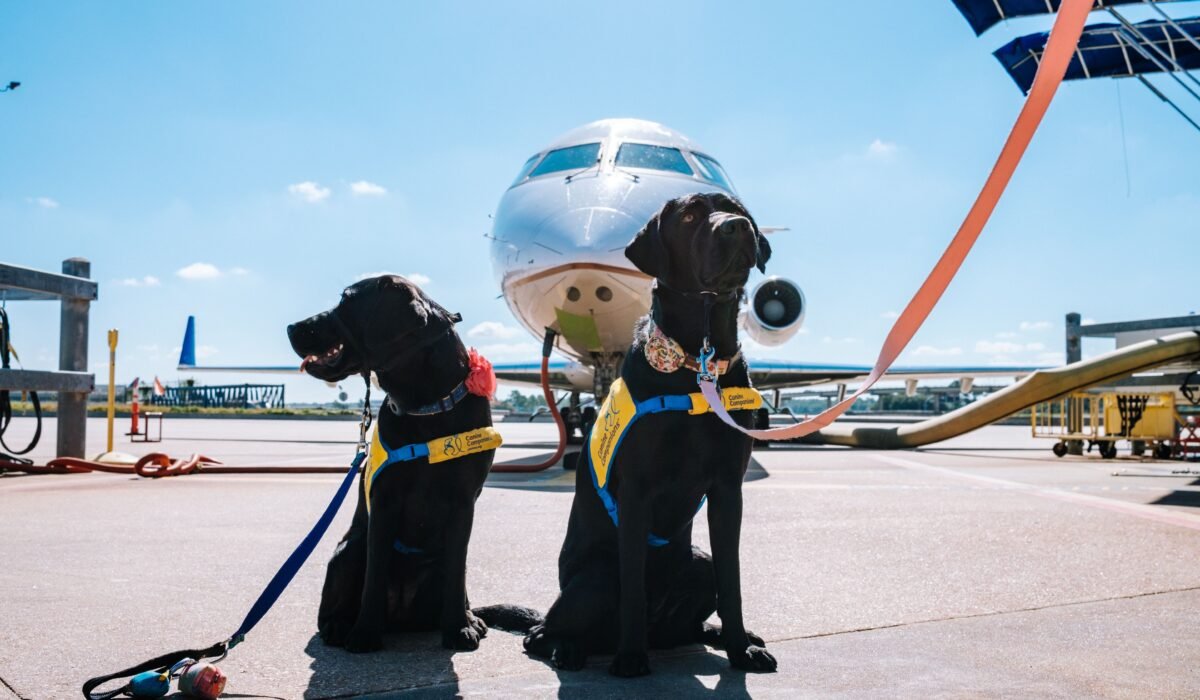
Navigating the complex world of USA airline pet travel policies can feel overwhelming for any pet parent planning a trip. You want to ensure your beloved companion’s journey is as safe and stress-free as possible, but the rules vary significantly between carriers, leaving many travelers confused about requirements, costs, and options. This comprehensive guide, from the Travel Support Team, will demystify the process, offering actionable advice and expert insights to help you prepare for a seamless travel experience with your furry friend.
Speak With A Flight Reservation Specialist
Need help navigating complex pet travel policies, making flight reservations, or handling last-minute changes? Our expert team is ready to assist you.
- Flight Reservations
- Flight Changes
- Flight Cancellations
- Refund Assistance
- Last-Minute Bookings
- Travel Support
Understanding USA Airline Pet Travel Policies: An Overview
The landscape of USA airline pet travel policies is constantly evolving, reflecting both regulatory changes and individual airline decisions. It’s not just about booking a ticket; it’s about understanding a complex set of rules designed to ensure the safety and welfare of your animal. With nearly 2 million pets flying on commercial airlines each year in the United States, according to industry estimates, the need for clear guidance is paramount.
What most people miss is that while the U.S. Department of Transportation (DOT) sets some overarching guidelines, individual airlines have significant leeway to establish their own specific rules. This means that a policy you encounter on one major carrier might be completely different on another. Our goal is to help you cut through that confusion, empowering you to make the best choices for your pet’s journey.
Which USA Airlines Are Most Pet-Friendly?
When considering which airline to choose for your companion, “pet-friendly” can mean different things. For some, it’s about allowing a broader range of animals in the cabin; for others, it’s about transparent policies and a good safety record for cargo. Based on our research, some airlines consistently rank higher for their accommodating USA airline pet travel policies.
As of 2026, Alaska Airlines frequently stands out as a top pet-friendly airline. They offer reasonable fees, often around $100 one-way for in-cabin pets, and a generous allowance of up to two pets per passenger if you purchase an extra seat. Their transparent policies and relatively low incident rates, transporting over 730,000 animals with an incident rate of only 0.26 between 2015-2020, highlight their commitment to pet safety.
Here’s a quick look at how some major US airlines compare:
- Alaska Airlines: Consistently praised for clear policies and reasonable fees ($100 for cabin, increasing to $200 on Jan 2, 2025). They even allow two similar-sized pets of the same species in one cabin carrier, which is rare.
- Southwest Airlines: Known for straightforward policies, allowing only small vaccinated cats and dogs in the cabin ($125 each way, refundable fee). They do not offer cargo options, simplifying the choice for many pet owners.
- Frontier Airlines: A unique option for those with diverse pets, as they allow not just dogs and cats, but also rabbits, guinea pigs, hamsters, and small household birds in the cabin for $99 each way. They also do not offer cargo services.
- Delta Air Lines: Permits small dogs, cats, and household birds in the cabin ($150 for domestic travel). However, like some other major carriers, their cargo options have significantly scaled back, primarily serving active military or government employees.
- American Airlines: Allows carry-on pets (cats and dogs) for $150. Their cargo/checked pet travel is now largely limited to active-duty U.S. military and U.S. State Department Foreign Service personnel, with specific breed restrictions (no brachycephalic breeds) and temperature embargoes.
- United Airlines: Allows cats and dogs in the cabin ($150 each way). Unfortunately, they no longer offer their general PetSafe® cargo program for the public, restricting cargo to active-duty military or State Department employees. United has historically reported higher incident rates, with 45 pet deaths and 42 injuries between 2015-2020.
- JetBlue Airways: Offers a dedicated “JetPaws” program for in-cabin cats and dogs, with fees typically around $125-$150 each way. They do not transport pets in cargo.
When you’re looking for pet friendly airlines in America, always check the most up-to-date information directly on the airline’s website. Policies can change, and it’s your responsibility to ensure compliance.
Speak With A Flight Reservation Specialist
Confused about which airline best suits your pet’s needs or need help booking the right flight? Don’t hesitate to reach out for personalized assistance.
- Flight Reservations
- Flight Changes
- Flight Cancellations
- Refund Assistance
- Last-Minute Bookings
- Travel Support
How Much Does it Cost to Fly with a Pet in the US?
One of the first questions pet parents ask is, “How much does it cost to fly with a pet in the US?” The answer largely depends on whether your pet travels in the cabin or as cargo, and which airline you choose. Generally, most major U.S. airlines charge between $95 and $150 each way for a pet in the cabin. This fee is typically non-refundable and applies per carrier, meaning if you have two pets in separate carriers, you’ll pay twice.
For pets traveling as checked baggage or cargo, the fees can be significantly higher, often ranging from $150 to $250 or more, depending on the pet’s size, weight, and the destination. These costs are in addition to the regular passenger fare and cover the special handling and care required for animal transport. A US airline pet fees comparison reveals that while in-cabin fees are somewhat standardized, cargo prices can vary more widely.
It’s crucial to factor these expenses into your travel budget. Remember, these fees don’t cover potential costs like a veterinary health certificate, an approved carrier, or any necessary international import permits. Always confirm the exact fees directly with your chosen airline, as they are subject to change without much notice, especially for routes or during peak seasons.
In-Cabin vs. Cargo: Navigating Pet Travel Options for USA Airlines
When planning to fly with your pet, you’ll primarily encounter two options: in-cabin travel or cargo/checked baggage. Understanding the distinctions is vital for making the right choice, especially given the evolving USA airline pet travel policies regarding larger animals. The ASPCA advises avoiding air travel whenever possible unless a dog can safely remain with their guardian in the cabin, citing various potential stressors associated with cargo travel.
In-Cabin Pet Travel: Your Companion by Your Side
For many pet owners, keeping their furry friend close is the priority. In-cabin travel allows small dogs and cats, and sometimes other small animals like birds or rabbits (on airlines like Frontier), to fly with you. Your pet must remain in an approved carrier that fits under the seat in front of you. This option is generally considered the safest and least stressful for pets, as they are with their owner in a climate-controlled, pressurized environment.
- Size and Weight Limits: Airlines have strict maximum dimensions for airline pet carrier requirements USA, typically allowing carriers that can fit under the seat (e.g., 18″ L x 11″ W x 11″ H for soft-sided). Your pet must be able to stand up, turn around, and lie down comfortably within the carrier.
- Booking Restrictions: There’s a limit to how many pets can fly in the cabin on a single flight. It’s imperative to book your pet’s spot as early as possible, as space is allocated on a first-come, first-served basis.
- Emotional Support Animals (ESAs): As of 2021, the U.S. Department of Transportation clarified that ESAs are classified as pets, not service animals, and are therefore subject to standard airline pet fees and policies. Only trained service animals are guaranteed free cabin travel.
Cargo and Checked Baggage Pet Travel: A Diminishing Option
For larger pets or those exceeding in-cabin size limits, checked baggage or cargo was once a common solution. However, many major US airlines have significantly scaled back or eliminated general pet cargo services due to safety concerns and logistical complexities. This change means that flying with large dogs USA airlines often requires more planning or alternative transport methods.
- Checked Baggage vs. Dedicated Cargo:
- Checked Baggage: This typically refers to pets traveling in the same compartment as passenger luggage, but in a pressurized, temperature-controlled area. Many airlines, like American and United, now only offer this for active-duty U.S. military or U.S. State Department Foreign Service personnel and their dependents.
- Dedicated Cargo Service: This involves booking your pet’s travel through the airline’s cargo division, often on a separate flight from yours. This service is now extremely limited for general pet owners on US carriers, with only a few, like Alaska Airlines, still offering it for pets up to 150 lbs (including kennel) under specific conditions.
- Breed and Temperature Restrictions: Airlines often impose restrictions on brachycephalic (snub-nosed) dog airline restrictions, such as Pugs, Bulldogs, and Persian cats, due to their respiratory difficulties, especially in cargo holds. Temperature embargoes are also common, preventing travel when ground temperatures are too hot or too cold at origin, layover, or destination airports.
- Safety Concerns: The U.S. Department of Transportation (DOT) requires airlines to report incidents of pet death, loss, or injury. While incidents are relatively rare, they do occur, highlighting the inherent risks of airline pet cargo safety.
Given these restrictions, if you’re traveling with a large dog, you might need to explore pet ground transport services or specialized pet relocation companies, especially for international pet travel from USA.
Essential Carrier, Health & Documentation Requirements
Understanding the strict carrier, health, and documentation requirements is a critical component of navigating USA airline pet travel policies. Failing to meet even one criterion can result in your pet being denied boarding. This is where meticulous planning truly pays off, ensuring everything is in order before you even head to the airport.
Airline Pet Carrier Requirements USA
Your pet’s carrier isn’t just a box; it’s their safe space during travel, and airlines have specific rules for its construction and dimensions. These airline pet carrier requirements are designed for your pet’s comfort and safety, as well as to fit within the aircraft’s constraints.
- In-Cabin Carriers:
- Soft-Sided vs. Hard-Sided: Most airlines prefer soft-sided carriers for in-cabin travel as they are more flexible and can be compressed slightly to fit under the seat.
- Ventilation: Must have adequate ventilation on at least two sides.
- Leak-Proof: The bottom must be leak-proof.
- Size: Must fit completely under the seat in front of you without blocking the aisle. Dimensions vary by airline, so always check your specific carrier’s dimensions against the airline’s current guidelines.
- Pet Comfort: Your pet must be able to stand up, turn around, and lie down in a natural position inside the carrier.
- Cargo/Checked Baggage Carriers:
- Hard-Sided: Mandatory for cargo travel, often referred to as IATA-compliant crates.
- Ventilation: Must have ventilation on all four sides.
- Food and Water Dishes: Securely attached and accessible from the outside without opening the crate.
- “LIVE ANIMAL” Labeling: Clearly marked with “LIVE ANIMAL” stickers, arrows indicating “this way up,” and your contact information.
- Size: Must be large enough for your pet to stand erect without touching the top, turn around easily, and lie down naturally.
Health Certificate for Pet Travel USA & Vaccinations
A pre-trip checkup with your veterinarian is non-negotiable. Dr. Carol McConnell, DVM, MBA, recommends this to confirm your pet’s health and vaccinations, emphasizing its criticality for their physical and emotional comfort. Most airlines require a valid health certificate for pet travel, issued by a licensed veterinarian within a specific timeframe (usually 10 days) prior to your flight.
Key health and documentation requirements often include:
- Rabies Vaccination: Proof of current rabies vaccination is almost universally required. Your pet must be at least 8 weeks old (some airlines require 10-16 weeks) and past the initial vaccination waiting period.
- Health Certificate: A certificate from a licensed veterinarian stating your pet is healthy enough to travel and free of contagious diseases. This document typically includes your pet’s breed, age, weight, and vaccination history.
- Microchip: While not always mandatory for domestic travel, a microchip is highly recommended for identification and is often a requirement for international travel or if your pet travels as cargo.
- Other Vaccinations: Depending on your destination and the airline, other vaccinations (e.g., distemper, parvovirus) might be required.
- Acclimation Certificate (for cargo): Some airlines may require a certificate stating your pet is acclimated to temperature extremes, though this is less common with reduced cargo options.
Always verify the exact requirements with your specific airline and destination, as they can change. For international travel, the requirements become even more complex, often involving USDA endorsements and specific forms, which we’ll touch on later.
Speak With A Flight Reservation Specialist
Navigating carrier dimensions or health certificate deadlines can be tricky. Let our team help you ensure all documentation and carrier requirements are met for your pet’s flight.
- Flight Reservations
- Flight Changes
- Flight Cancellations
- Refund Assistance
- Last-Minute Bookings
- Travel Support
Beyond Sedation: Reducing Pet Anxiety & Ensuring Welfare
Ensuring your pet’s welfare during air travel goes beyond simply meeting the minimum requirements. A key aspect of responsible pet travel, highlighted by leading veterinary organizations, is managing anxiety without resorting to sedation. The American Veterinary Medical Association (AVMA), along with most airlines, strongly discourages sedating pets before flying due to increased risks of disorientation, anxiety, or medical complications, especially at high altitudes.
Instead of sedatives, a proactive “Proactive Pet Parent’s Playbook” approach focuses on preparing your pet mentally and physically for the journey. Here are some veterinarian-backed strategies:
- Crate Training: Start early! Introduce your pet to their travel carrier weeks or even months before the flight. Make it a positive, comfortable space with treats, toys, and familiar bedding. This helps them view the carrier as a den, not a punishment.
- Exercise Before Flight: A tired pet is a calm pet. Ensure your dog gets plenty of exercise a few hours before heading to the airport. This can help them relax and sleep during the flight.
- Familiar Scents: Place a favorite blanket or an item of your clothing with your scent inside the carrier. Familiar smells can provide comfort and reduce stress in an unfamiliar environment.
- Calming Aids: Discuss natural calming aids with your veterinarian. This could include pheromone sprays (like Adaptil for dogs or Feliway for cats), calming treats, or anxiety wraps (like a Thundershirt). Always consult your vet before administering any supplement.
- Limited Food/Water: Offer a light meal a few hours before the flight to prevent an upset stomach, but avoid feeding right before departure. Provide water right up until check-in, and then offer small amounts during layovers if possible. For cargo, ensure water dishes are full and accessible.
- Potty Breaks: Utilize pet relief areas at US airports before and after your flight. These designated areas are crucial for your pet’s comfort and can alleviate anxiety associated with holding it in.
Remember, your calm demeanor can also significantly impact your pet’s stress levels. Staying relaxed and confident will signal to your pet that everything is okay.
New CDC Rules & International Pet Travel Considerations
While this guide primarily focuses on domestic USA airline pet travel policies, it’s impossible to ignore the critical and often complex requirements for international pet travel, especially concerning entry into the United States. The Centers for Disease Control and Prevention (CDC) plays a pivotal role here, and their rules recently underwent significant changes.
August 1, 2024 CDC Dog Import Requirements USA
The new CDC requirements for bringing dogs into the U.S. took effect on August 1, 2024, representing a major shift in policy. These rules are designed to prevent the reintroduction of rabies into the United States and depend heavily on the dog’s travel history and country of origin regarding rabies risk. It’s imperative that pet owners understand these changes, as non-compliance can lead to denial of entry or lengthy quarantines.
Key aspects of the new CDC dog import requirements USA include:
- Microchip: All dogs entering the U.S. must be microchipped.
- Age Requirement: Dogs must be at least six months old.
- Completed CDC Dog Import Form: This form is mandatory and must be completed accurately.
- Rabies Vaccination and Serologic Test: Requirements vary based on the country’s rabies risk status. Dogs from high-risk countries will have the most stringent requirements, often needing proof of rabies vaccination and a valid rabies serologic titer test (checking for sufficient antibodies).
- Port of Entry: Dogs from high-risk rabies countries must enter through specific U.S. ports of entry that have CDC-approved animal care facilities.
For detailed and up-to-date information, always consult the official CDC website on bringing an animal into the U.S. well in advance of your travel date.
Beyond CDC: International Pet Travel from USA
If you’re traveling *from* the USA to an international destination, you’ll need to navigate not only your airline’s policies but also the import regulations of the destination country. This often involves additional steps:
- USDA Endorsement: Many countries require your pet’s health certificate and other veterinary documents to be endorsed by a USDA-accredited veterinarian and then by the USDA APHIS office. This process can take time, so plan accordingly.
- Import Permits: Some countries require you to apply for an import permit in advance.
- Quarantine: Certain countries, like Australia and New Zealand, have strict quarantine periods for pets entering their borders, regardless of health status.
- Specific Treatments: Requirements for deworming, flea/tick treatments, or specific blood tests are common. For example, a screwworm certificate might be required for pets returning to the U.S. from certain areas, including Mexico.
The U.S. Department of Agriculture (USDA) Animal and Plant Health Inspection Service (APHIS) provides comprehensive resources for <a href="https://www.aphis.usda.gov/aphis/ourfocus/animalwelfare