
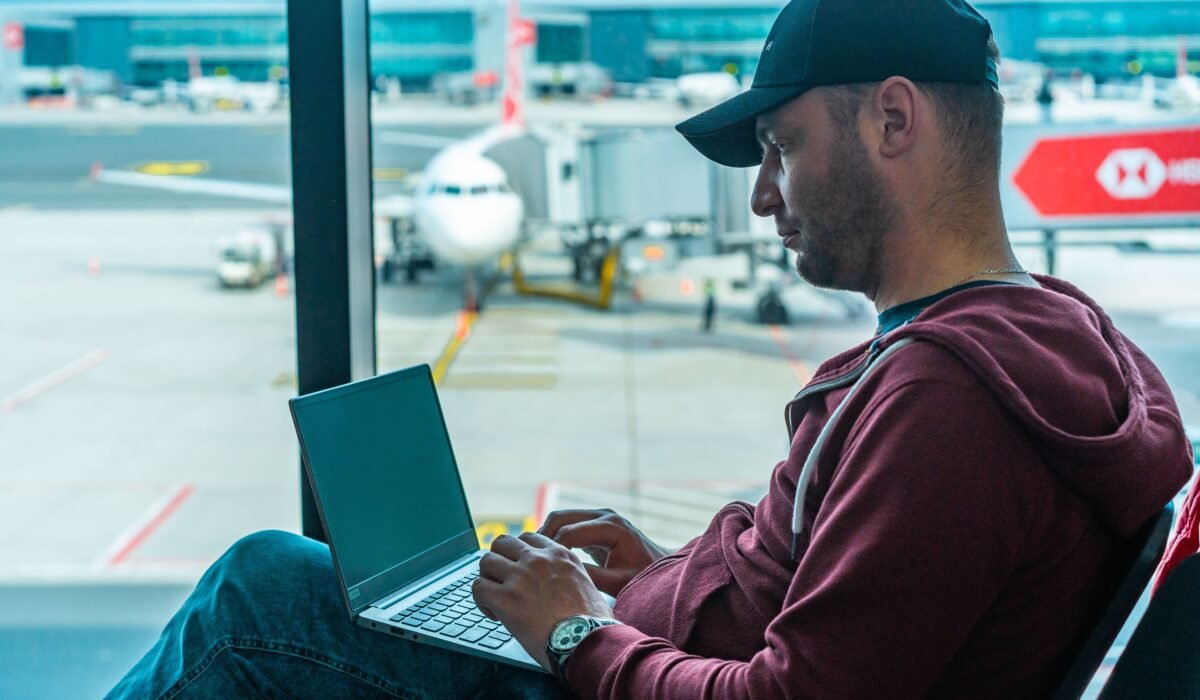
Navigating the world of in-flight connectivity can be confusing, which is why this comprehensive USA airline Wi-Fi guide is essential for modern travelers. Understanding the diverse options, varying costs, and performance expectations of airplane Wi-Fi across major U.S. carriers is crucial for staying connected, productive, or entertained during your journey. As part of the Travel Support Team, we’ve researched the latest offerings and future trends to provide you with a clear roadmap to seamless in-flight internet.
Speak With A Flight Reservation Specialist
Need help with flight reservations, flight changes, cancellations, refund requests, missed flights, or last-minute bookings? Speak with a flight reservation specialist now.
- ✔️ Flight Reservations
- ✔️ Flight Changes
- ✔️ Flight Cancellations
- ✔️ Refund Assistance
- ✔️ Last-Minute Bookings
- ✔️ Travel Support
What are the USA airline Wi-Fi options and how much do they cost?
When you’re flying across the USA, the availability and cost of in-flight internet can vary wildly between carriers and even specific aircraft. Most airlines offer some form of connectivity, but the underlying technology and pricing models differ significantly. Understanding these options is key to managing your expectations and budget.
The primary in-flight internet providers in the U.S. include established players like Viasat, Gogo (now Intelsat), and Panasonic Avionics, alongside the newer, high-speed Starlink. These providers utilize different satellite and air-to-ground (ATG) technologies, impacting speed and reliability. For instance, Viasat and Panasonic typically use geostationary satellites, while Starlink leverages a constellation of low-Earth orbit (LEO) satellites for faster service.
Understanding Airline Wi-Fi Cost Models
The airline Wi-Fi cost structure can range from entirely free to premium subscriptions, often based on flight duration, data usage, or even your loyalty status. Most airlines employ a freemium model, offering basic services like free messaging while charging for full browsing and streaming access. According to the “Moment’s Inflight Connectivity Benchmark 2025” report, this freemium approach is adopted by 58% of connected airlines globally.
- Per-Flight Passes: This is the most common option. Prices typically range from $8-$15 for domestic flights and $10-$30 for international journeys. These passes often cover the entire duration of a single flight.
- Hourly or Data-Based Plans: Some airlines offer Wi-Fi for a set number of hours (e.g., 1 hour for $7) or based on data consumption. This can be cost-effective for light users but quickly adds up if you’re streaming or downloading.
- Monthly/Annual Subscriptions: Frequent flyers might benefit from subscriptions. For example, a single airline’s monthly pass can cost around $49-$69, often allowing connectivity on multiple flights within that airline’s network.
- Free Messaging: Many airlines, even those charging for full internet, provide free access to messaging apps like iMessage, WhatsApp, and Facebook Messenger. This is a great perk for staying in touch without incurring extra costs.
Before your flight, it’s always a good idea to check your specific airline’s website for the most up-to-date information on in-flight connectivity, as prices and availability can change. This proactive step can save you time and money, ensuring you know what to expect from your Wi-Fi on US airlines.
Which US airlines offer free Wi-Fi in 2026?
The trend towards free Wi-Fi on planes is slowly but surely gaining momentum, with several major U.S. carriers now offering or actively rolling out complimentary internet access, especially for their loyalty program members. This shift reflects the growing passenger demand, as a 2024 Viasat survey revealed that 80% of travelers consider in-flight Wi-Fi essential.
As of 2026, here’s a breakdown of which US airlines offer free Wi-Fi:
- JetBlue: Leading the pack, JetBlue has long offered free “Fly-Fi” to all passengers on all flights, with no sign-up needed. They utilize Viasat’s Ka-band technology, generally providing solid speeds for basic browsing and email.
- Delta Air Lines: Delta began offering free Wi-Fi for SkyMiles members on most domestic flights in 2023 and is steadily expanding this perk to select international routes. If you’re not a SkyMiles member, a flight pass might cost around $5-$7, but signing up for the free loyalty program is a no-brainer for complimentary access.
- American Airlines: A significant development for 2026 is American Airlines’ launch of free high-speed Wi-Fi for AAdvantage members. This service, in partnership with AT&T and powered by Viasat and Intelsat, is rolling out across its narrowbody and dual-class regional flights. For non-members or those seeking higher speeds, paid plans start around $10 per flight.
- United Airlines: United is actively rolling out free Starlink Wi-Fi for MileagePlus members, with installations continuing throughout 2026. This is a game-changer for speed and reliability. On aircraft not yet equipped with Starlink, Wi-Fi costs $8 for MileagePlus members and $10 for non-members on domestic and short-haul international flights.
- Southwest Airlines: As of October 2025, Southwest Airlines offers free Wi-Fi to all Rapid Rewards members. Non-members can purchase access for $8 per flight. Southwest is also among the airlines planning to integrate Starlink, with their first Starlink-equipped plane expected by the end of June 2026.
- Hawaiian Airlines: Hawaiian now provides free, high-speed Starlink Wi-Fi on its A330 and A321neo aircraft for trans-Pacific flights. They also plan to install it on their new Boeing 787 aircraft, making long-haul travel across the Pacific much more connected.
While fully free Wi-Fi remains somewhat rare (only 13% globally, but growing), the trend of offering it to loyalty program members is a smart move by airlines. It encourages sign-ups and enhances the passenger experience, especially for those who travel frequently.
Speak With A Flight Reservation Specialist
Need help with flight reservations, flight changes, cancellations, refund requests, missed flights, or last-minute bookings? Speak with a flight reservation specialist now.
- ✔️ Flight Reservations
- ✔️ Flight Changes
- ✔️ Flight Cancellations
- ✔️ Refund Assistance
- ✔️ Last-Minute Bookings
- ✔️ Travel Support
How fast is in-flight Wi-Fi and can you stream Netflix?
The question of how fast is in-flight Wi-Fi is a crucial one for many travelers, especially those hoping to stream content or work efficiently. Historically, airplane Wi-Fi speed has been a significant pain point, often struggling with slow connections and high latency due to reliance on geostationary satellites located far from Earth.
Traditional in-flight connectivity, provided by companies like Viasat and Intelsat (Gogo), can offer decent speeds for browsing and email, often ranging from 5-20 Mbps. However, these speeds are shared among potentially hundreds of passengers, leading to performance drops during peak usage. The high latency (the delay in data transmission) from geostationary satellites can also make real-time applications like video calls or online gaming frustrating.
Streaming on Airplane Wi-Fi: A Reality Check
Can you stream Netflix on a plane with Wi-Fi? The short answer is: it depends heavily on the airline, the specific aircraft, and the Wi-Fi provider. With traditional satellite systems, streaming services like Netflix, Hulu, or YouTube can be hit-or-miss. Many airlines either throttle bandwidth for streaming or block certain services entirely to ensure a baseline experience for all users.
However, the landscape is rapidly changing with the advent of Starlink airline Wi-Fi. Ookla, the provider of the Speedtest app, analyzed data from Q1 2025 and found that SpaceX’s Starlink was at the top for in-flight Wi-Fi performance, offering significantly higher speeds and lower latency. United Airlines, for instance, reports Wi-Fi satisfaction scores on Starlink-equipped aircraft are more than double the rest of its fleet, with round trip times in the 20-40 millisecond range, a dramatic improvement over the 2,000 milliseconds for older systems.
With Starlink, passengers can expect speeds capable of supporting high-definition streaming, smooth video calls, and online gaming. So, if your flight is on an airline that has adopted Starlink, your chances of enjoying seamless Netflix streaming are significantly higher. Always check with your airline before flying if streaming is a priority.
Which airlines use Starlink Wi-Fi and why is it better?
Starlink, SpaceX’s satellite internet constellation, is rapidly becoming the gold standard for in-flight connectivity, fundamentally changing the game for travelers. Its superior performance has led several major U.S. airlines to integrate this technology into their fleets, promising a truly connected experience. Understanding which airlines use Starlink Wi-Fi and the underlying reasons for its superiority is crucial for anyone prioritizing fast and reliable in-flight internet.
Currently, the following U.S. airlines are either actively using or have committed to installing Starlink Wi-Fi:
- United Airlines: United is aggressively rolling out Starlink across its fleet, with installations continuing throughout 2026. CEO Scott Kirby described the integration of Starlink Wi-Fi on every airplane as a “step function increase” in customer satisfaction.
- Hawaiian Airlines: Hawaiian now offers free, high-speed Starlink Wi-Fi on its A330 and A321neo aircraft for trans-Pacific routes, with plans to extend it to new Boeing 787 aircraft.
- Alaska Airlines: Alaska has announced plans to install Starlink Wi-Fi on its aircraft, with installations expected to begin in 2026.
- Southwest Airlines: Southwest is also joining the Starlink revolution, with its first Starlink-equipped plane anticipated by the end of June 2026.
Why Starlink Airline Wi-Fi Stands Out
The reason for Starlink’s rapid adoption and superior performance lies in its innovative technology, primarily its use of Low Earth Orbit (LEO) satellites. Here’s why Starlink is better:
- Significantly Lower Latency: Unlike traditional geostationary satellites that orbit 22,000 miles above Earth, Starlink’s LEO satellites orbit at just 340 miles. This drastically reduces the distance data has to travel, leading to much lower latency. As Ookla noted, Starlink offers round trip times in the 20-40 millisecond range, compared to 2,000 milliseconds for older systems. This makes a huge difference for real-time applications like video calls and online gaming.
- Higher Speeds: Starlink’s constellation design allows for much higher bandwidth delivery to aircraft. Passengers can expect speeds of 100-250 Mbps, which is more than sufficient for multiple users to stream high-definition video, browse, and work simultaneously without significant slowdowns. This directly addresses the common complaint of slow in-flight connectivity.
- Global Coverage: The vast network of LEO satellites ensures more consistent global coverage, especially over polar regions and oceans where traditional satellite internet can be spotty or unavailable. This is a major advantage for long-haul international flights.
- Enhanced Reliability: With many satellites in constant motion, if one satellite is out of range, the connection can seamlessly hand off to another, leading to a more reliable and consistent internet experience throughout the flight.
In essence, Starlink airline Wi-Fi offers a connection quality closer to what you’d experience on the ground, making it a true game-changer for in-flight internet. This advance means that the dream of truly productive work or uninterrupted entertainment in the sky is now becoming a widespread reality.
Speak With A Flight Reservation Specialist
Need help with flight reservations, flight changes, cancellations, refund requests, missed flights, or last-minute bookings? Speak with a flight reservation specialist now.
- ✔️ Flight Reservations
- ✔️ Flight Changes
- ✔️ Flight Cancellations
- ✔️ Refund Assistance
- ✔️ Last-Minute Bookings
- ✔️ Travel Support
Is buying Wi-Fi on a plane worth it for productivity or entertainment?
Deciding whether buying Wi-Fi on a plane is worth the expense often comes down to your individual needs and the specific flight experience. For many, the ability to stay connected above 30,000 feet is no longer a luxury but a necessity. The global In-flight Wi-Fi market size, valued at USD 6,368 million in 2024 and projected to reach $16,040 million by 2034, clearly indicates a growing demand and perceived value.
For Productivity: Business Travelers and Remote Workers
For business travelers or remote workers, in-flight connectivity can be invaluable. Being able to respond to emails, finalize presentations, or participate in text-based meetings can turn otherwise unproductive travel time into billable hours. A 2024 Viasat survey found that 80% of passengers consider in-flight Wi-Fi essential, and 22% would not consider flying on a long-haul flight without connectivity, underscoring its importance for many.
If you’re on a long flight and have critical work to do, the cost of a Wi-Fi pass might easily be justified by the productivity gains. Just be mindful of the type of work you need to do. High-bandwidth activities like video conferencing might still be challenging on some systems, even with Starlink, due to shared resources.
For Entertainment: Streaming, Social Media, and Browsing
For leisure travelers, the value proposition shifts to entertainment and staying socially connected. If you’ve exhausted your offline content, or simply want to browse social media, check sports scores, or chat with friends, Wi-Fi offers that freedom. The ability to stream content (especially with better systems like Starlink) transforms the flight experience, making long journeys feel shorter.
However, for purely entertainment purposes, consider the airline’s in-flight entertainment system, which is often free and offers a wide selection of movies and TV shows. Also, downloading content to your device before your flight can save you money and ensure uninterrupted viewing, regardless of Wi-Fi performance.
Making the Decision
Ultimately, the “worth it” factor depends on:
- Flight Duration: Shorter flights might not warrant the cost, but longer flights often do.
- Your Needs: Is it critical work, or just casual browsing?
- Airline & Wi-Fi Provider: As this USA airline Wi-Fi guide explains, Starlink offers a significantly better experience. Check your flight’s provider if possible.
- Cost: Compare the per-flight cost against monthly subscriptions if you travel frequently with the same airline.
My advice from the Travel Support Team is this: if you have a tight deadline, need to stay in contact for emergencies, or simply want to maximize your comfort on a long journey, investing in in-flight Wi-Fi can absolutely be worth it. For casual use, weigh the cost against alternative entertainment options.
Airline Wi-Fi troubleshooting tips: How to fix common connection issues
Even with advancements in in-flight connectivity, encountering issues with airplane Wi-Fi is still a common frustration for travelers. Whether it’s a dropped connection, slow speeds, or difficulty logging in, these problems can derail your productivity or entertainment plans. As part of our comprehensive USA airline Wi-Fi guide, here are some practical airline Wi-Fi troubleshooting tips to help you resolve common connection issues onboard.
- Restart Your Device and Reconnect: This is the classic first step for a reason. A quick restart of your laptop, tablet, or smartphone can often clear up minor software glitches that might be preventing a proper connection. After restarting, try to reconnect to the airline’s Wi-Fi network.
- Forget the Network and Rejoin: Sometimes, your device might hold onto old or corrupted network settings. Go to your device’s Wi-Fi settings, select the airline’s network, choose “Forget This Network” or “Delete,” then search for and rejoin the network from scratch. This can often resolve login or authentication problems.
- Check for Service Interruptions: In-flight Wi-Fi relies on satellite signals, which can be affected by weather conditions, geographical location (e.g., flying over oceans or remote areas), or technical issues with the system itself. Listen for announcements from the flight crew; they often inform passengers if there’s a known Wi-Fi outage. You can also ask a flight attendant if the system is experiencing issues.
- Move Closer to an Access Point (if possible): While not always feasible on a plane, if you’re in a less crowded section or near an access point, you might get a stronger signal. This is more relevant in larger aircraft where signal distribution might vary.
- Disable VPNs (Initially): While a VPN is recommended for security (as discussed in the next section), it can sometimes interfere with initial connection or login to the airline’s portal. Try connecting to the Wi-Fi and completing the purchase/login process without your VPN active. Once connected, you can then enable your VPN.
- Clear Browser Cache and Cookies: If you’re having trouble accessing the airline’s Wi-Fi portal or landing page, your browser’s cache or cookies might be causing a conflict. Try clearing them or using a different browser (e.g., if you’re using Chrome, try Firefox or Safari).
- Contact Flight Crew or Tech Support (if available): If all else fails, politely inform a flight attendant. While they might not be IT experts, they can sometimes reset the system or provide specific instructions for that aircraft. Some airlines also offer limited on-board tech support via the entertainment system or a dedicated helpline. If you paid for Wi-Fi that didn’t work, remember your USA Airline Passenger Rights and keep your receipt for potential refund claims.
My experience helping travelers with various issues, from rebooking flights to lost baggage, tells me that patience and methodical troubleshooting are key. Don’t immediately assume the Wi-Fi is completely broken; often, a simple step can restore your connection. These airline wifi troubleshooting tips can save you a lot of headache.
Ensuring your privacy and security on airplane Wi-Fi
While the convenience of in-flight connectivity is undeniable, it’s crucial to address the potential privacy and security concerns associated with using airplane Wi-Fi. Public Wi-Fi networks, including those on planes, can be vulnerable to various cyber threats. Protecting your data and personal information should always be a priority when connecting in the sky.
Understanding the Risks of Public Wi-Fi
When you connect to an airline’s Wi-Fi network, you’re essentially joining a public network shared by hundreds of other passengers. This setup can expose you to risks such as:
- “Evil Twin” Attacks: Malicious actors can set up fake Wi-Fi networks that mimic legitimate ones (e.g., “AA_Free_WiFi” instead of “AA_Wi-Fi”). If you connect to an “evil twin,” your data can be intercepted. Always double-check the network name.
- Data Snooping: Without proper encryption, other users on the same network, or even the network provider, could potentially monitor your internet activity.
- Malware Distribution: Less secure networks can be exploited to distribute malware or compromise devices that are not adequately protected.
Best Practices for Wi-Fi Security on Flights
To ensure your privacy and security on airplane Wi-Fi, especially when dealing with sensitive information, follow these recommendations:
- Use a Virtual Private Network (VPN): This is arguably the most important step. A VPN encrypts your internet traffic, creating a secure tunnel between your device and the internet. Even if someone tries to snoop on the network, they’ll only see encrypted data. This is essential for protecting sensitive activities like online banking or logging into work accounts.
- Verify the Network Name: Always ensure you are connecting to the official airline Wi-Fi network. If there are multiple options, err on the side of caution or ask a flight attendant for the correct network name.
- Avoid Sensitive Transactions on Unsecured Networks: If you don’